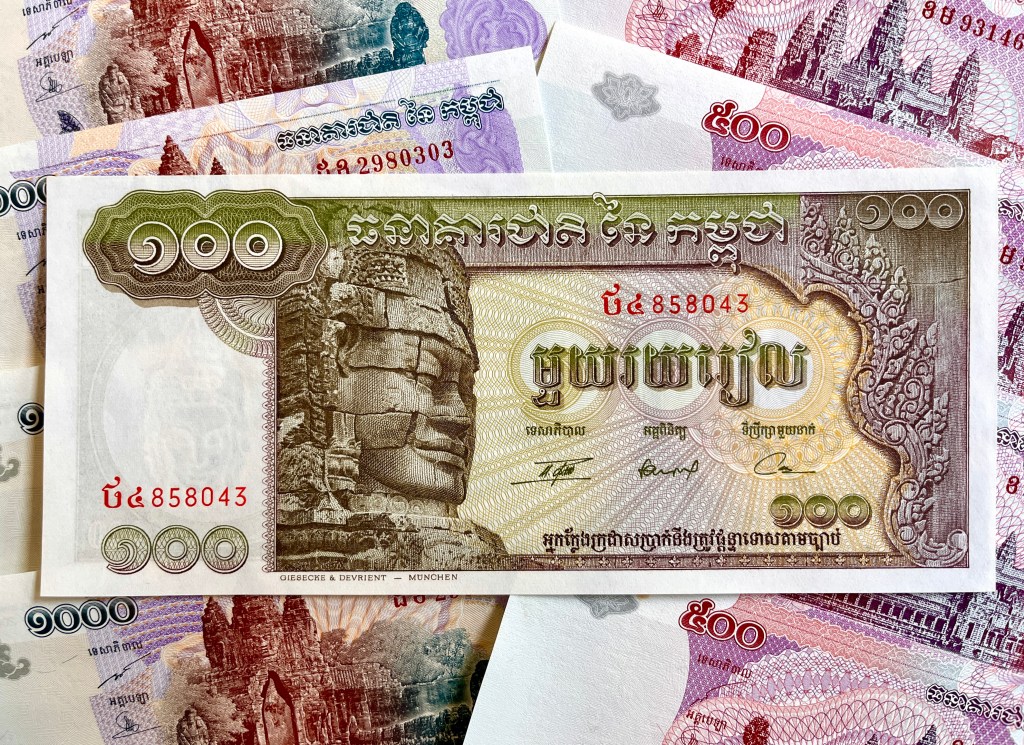
The Cambodian Riel (KHR), first appeared in 1955 and circulated alongside its predecessor, the Piastre, which it eventually replaced to become Cambodia’s national currency. Cambodia has a long history of colonialism and it was under French rule for much of the 20th century until gaining independence on November 9, 1953. Since then, Cambodia saw two Riels come into existence, the first circulated between 1953 – 1975 and the second as of the 1980s. Aside its colonial past, Cambodia was marred by a devastating civil war which led to genocide and saw the totalitarian and ruthless Khmer Rouge regime of Pol Pot, rule the country between 1975 – 1979. During this period Cambodia’s monetary system was essentially suspended. Since the 1990s, the United Sates dollar has been widely accepted alongside the Riel, particularly in urban areas or larger centers of commerce and tourism.
Obverse
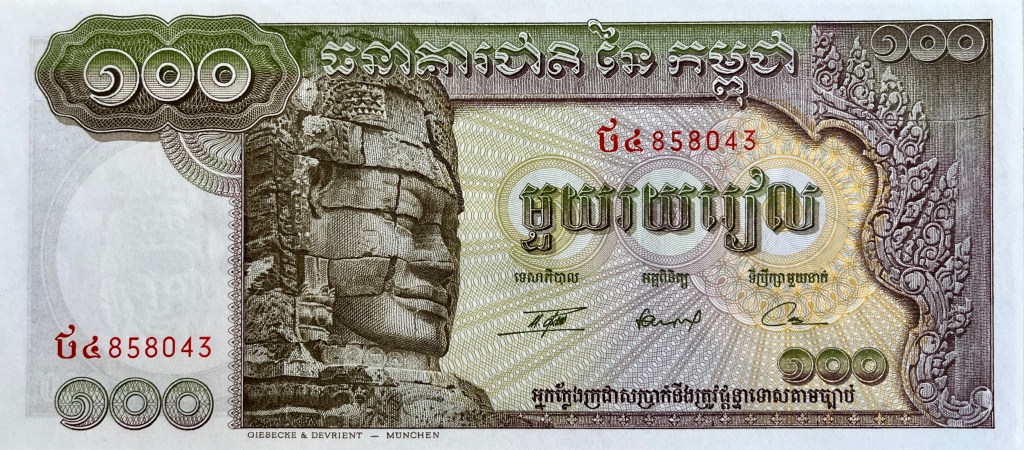
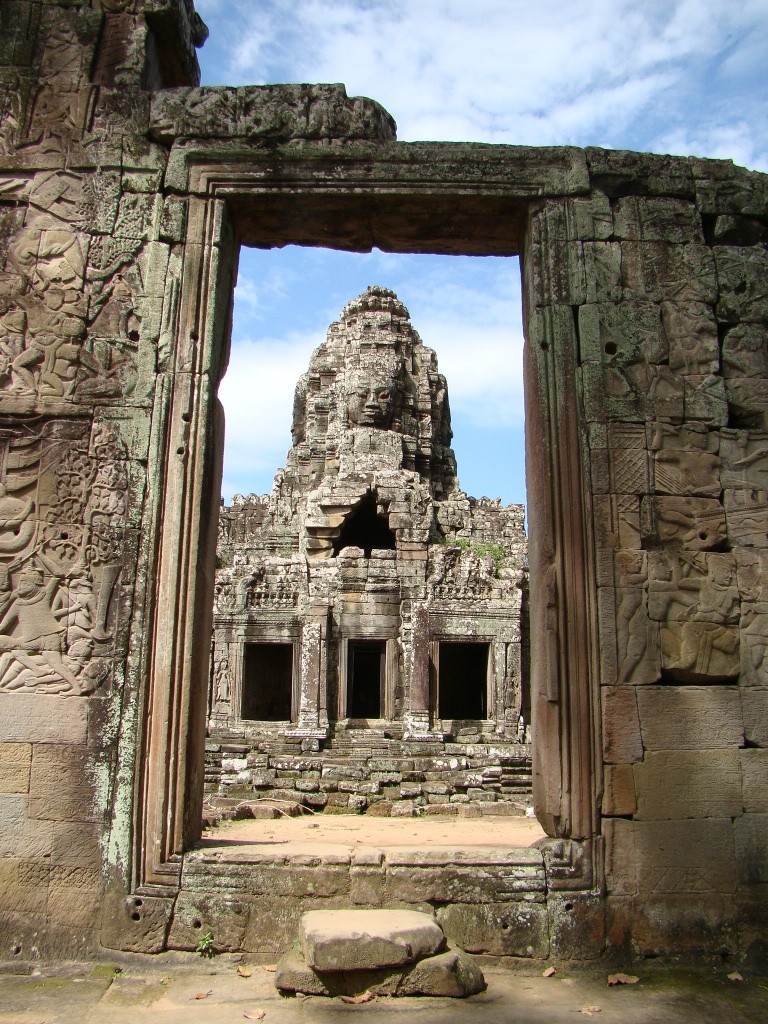
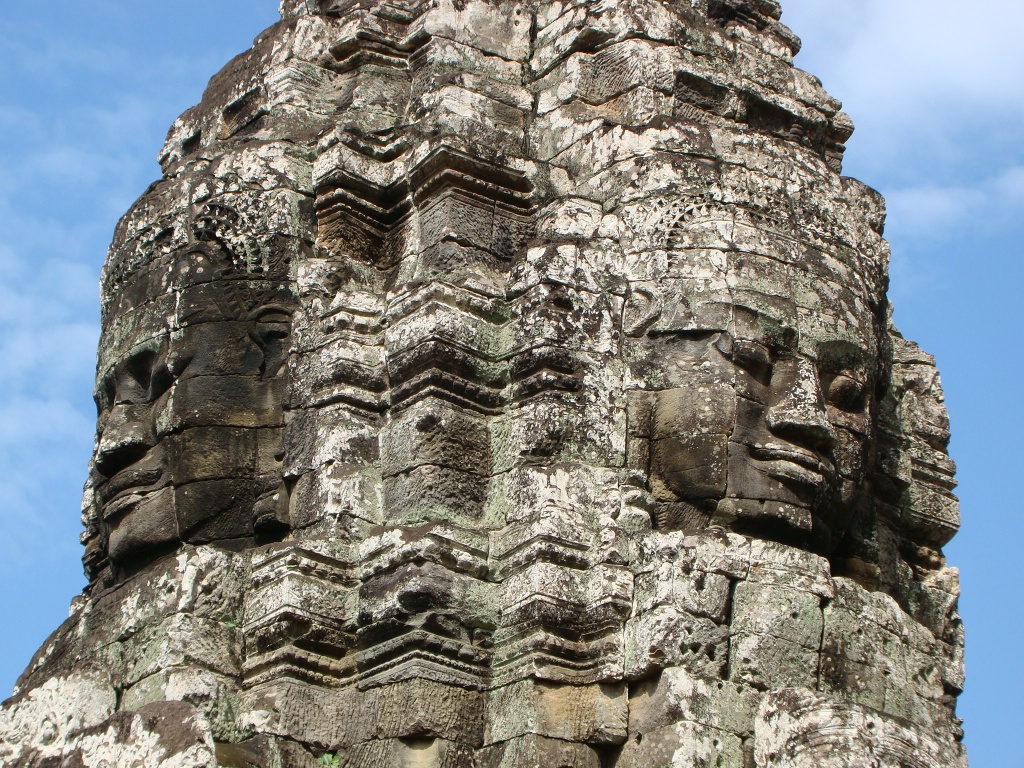
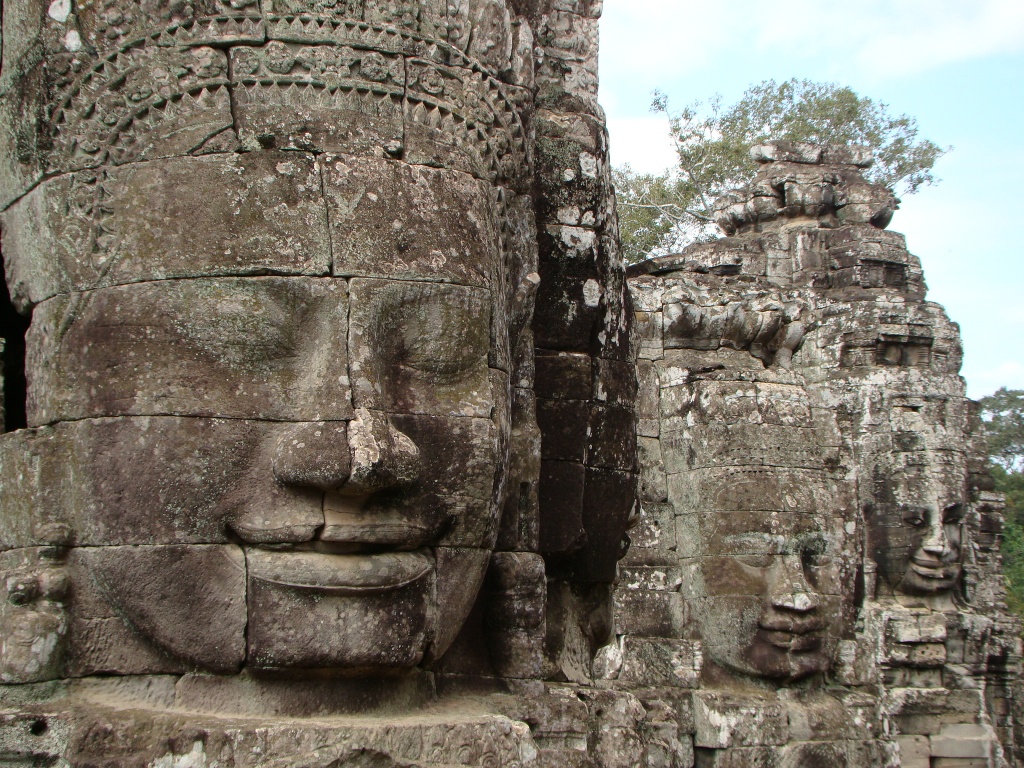
The 1972 issue 100 Riels note is made of cotton material and measures 175 x 77 mm. On the left panel is a watermark of the Buddha and to its right is a depiction of the Statue of Lokéswara located at the Bayon temple within the larger complex at Angkor Wat. Built during the 12th and 13th centuries, Bayon was constructed as the state temple of King Jayavarman VII (King of the Khmer Empire), and was the last temple built at Angkor. Unlike most temples at Angkor Wat which were built to revere the Hindu deity Vishnu, Bayon was built to worship Buddhist deities, and is believed to feature either the King’s head or Lokésvara (Lord of the World), the latter being referenced as displayed on the banknote. Whoever’s head it is, the subject is still up for debate today among scholars and historians alike. The note’s denomination is visible within its four corners and the inscription of National Bank of Cambodia appears above the statue’s head (in Khmer, Cambodia’s official language). The serial number is listed twice in red ink in horizontal orientation reading left to right. Another depiction of ornate carvings is observed on the right panel maintaining a consistent theme with the Bayon temple at Angkor.
Going Down Memory Lane
These shots were captured while on a trip to Cambodia in 2011, a highly memorable and reflective trip.

Reverse
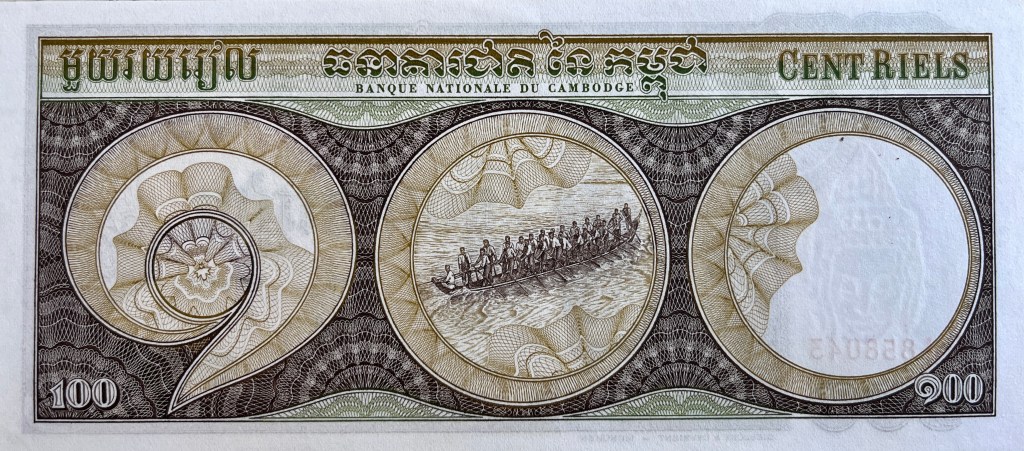
The back side depicts a wooden long boat at the Water Festival, an auspicious occasion in Cambodia celebrating the end of monsoon season in late October early November. Dragon boat races are an endemic part of the festival fielding teams and participants from all over the country. The note’s watermark is now seen on the right panel just above the French inscription “CENT RIELS” translating into Hundred Riels. The denomination is depicted in both Khmer and Arabic numerals while the National Bank of Cambodia is visible in the top center portion of the note in both languages once again. With the issuance of the second riel in the 1980s, French was replaced by English which started appearing on the 1990s issued notes alongside Khmer.
My Two Cents
The 100 Riels note of 1972 is half a century old, it’s a relic that shines bright to illuminate a significant vignette of Cambodia’s history. The note was part of a series that preceded the dark years of the Khmer Rouge (one of human history’s darkest episodes in which 2 million or more people were killed), and perhaps stirs up memories of a peaceful nation two decades on from independence forging a new and bright future for itself. The note bears a commanding presence due its larger size format (vs. most notes in circulation around the world today). It also channels us back to an era when the people of present day Cambodia were flourishing, their culture expanding, and their indelible mark on history was being established in form of Angkor Wat, the largest religious architectural complex the world has ever seen. Millions of people visit the temple complex annually, now a UNESCO World Heritage Site.
For me, this note also possesses a personal attachment in that Cambodia left a profound impression on me during my visit over 10 years ago (due to its unique culture, its natural wonders and beauty and its volatile past). Having partly grown up too in a country that was also ruled by a dictatorship, only makes me lament life under such condition and the hardships it bore. Fortunately, all that is now in the past!

 The Paper Money Guy