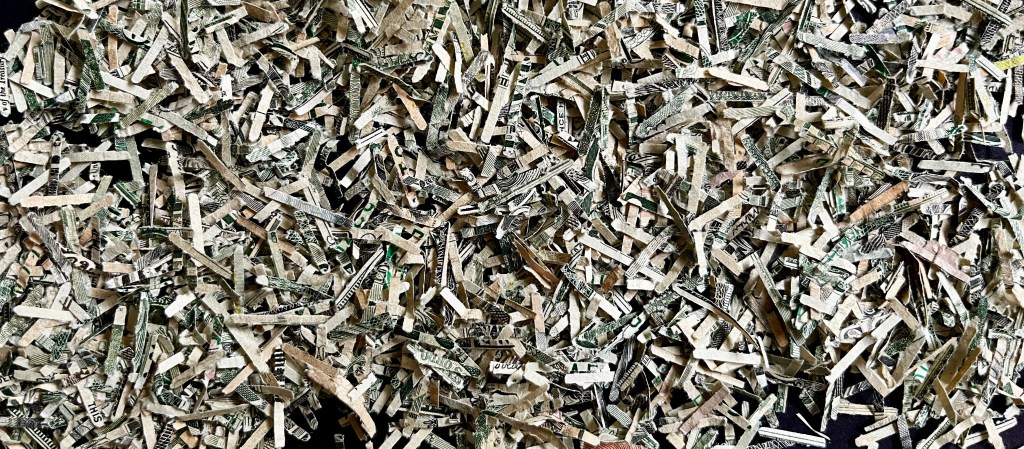
If you’re in America the answer really depends on how much of it you find, physically speaking and what’s on it. If you found undamaged US banknotes you’re in luck, enjoy your find. However, if you found part of a note or damaged notes, you may still be in luck but there are some caveats.
Most of us can relate to losing money or misplacing it never to be found again. But how many of us have ever found a bill or even several bills? I remember once finding a few $20 bills in a parking lot. There were three or four in perfectly usable condition and the notes were authentic and whole. The incident made for a good day for me and I imagine a bad day for the person who lost the money. There were also times when I found single dollars here and there, and similar to the $20 parking lot notes, they too were used but they were also whole.
So what happens when you find part of a note or damaged notes where the extent of the harm renders them unfit to be utilized as currency? It all boils down to how much is left and what is still shown. Say you find part of a $20 bill (that’s about half the original size at minimum), and the serial number and its denomination are still visible. You’re in pretty good shape in that case and your local commercial bank should be able to replace it for you. Now say the damage is a lot more severe and the value of the note cannot be identified, or the part you have is less than half its original size. In that case, it’s time to get the government involved.
The US Government’s BEP (Bureau of Engraving & Printing), has a dedicated Mutilated Currency Division that can redeem mutilated currency for individuals and business in possession of such notes. The department classifies mutilated currency as: “currency which has been damaged to the extent that one-half or less of the original note remains, or its condition is such that its value is questionable”. According to the BEP, the more common ways currency becomes mutilated are by fire, water, exposure to chemicals, damage caused by animals, and damage caused by burying it.
In order for the department to redeem the notes to the person in lawful possession, the following conditions must be met:
◦ More than 50% of the note is present and clearly identifiable as US currency along with any remnants of security features OR
◦ 50% or less of a note that’s identifiable as US currency is present and the manner in which it was mutilated along with evidence to support that the missing portions have been completely destroyed
The BEP apparently receives over 20,000 requests for examination of mutilated currency on average each year valued in excess of $35 million. So if you have any damaged notes lying around that qualify as mutilated, you may want to check how they stack up against the conditions for redemption. If you are interested in having your notes examined by the BEP, you can follow the steps listed here. Good luck!
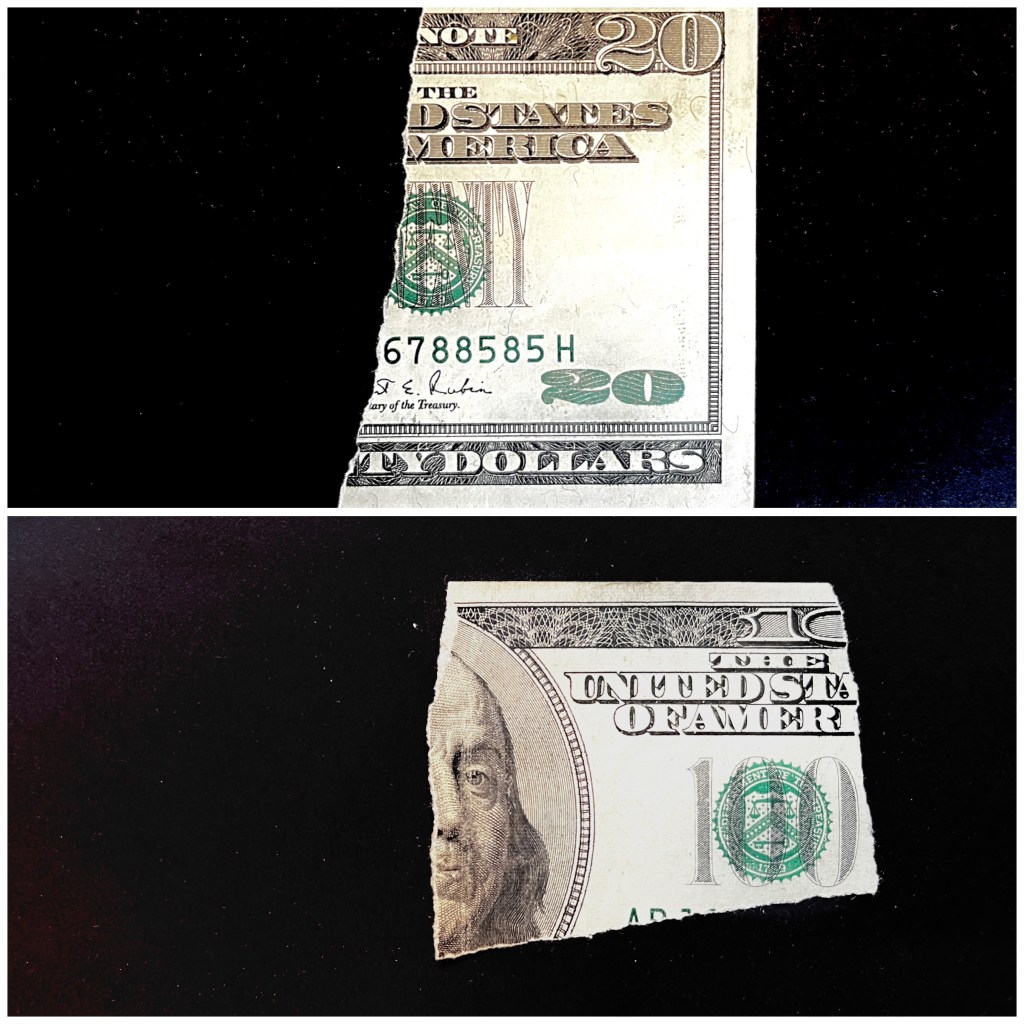
The damaged notes I found just below unfortunately do not satisfy any conditions for redemption (by a local bank or the BEP), which is why I retained them as part of my collection. The persons who found the other portions of these notes could’ve faired much better.
So whether you found partial bills or experienced an incident that left some of your notes mutilated, there are ways to retrieve the full value of the notes so long as the right conditions to warrant a replacement are met. As for finding more damaged notes in my future, I hope the 3rd time’s a charm and there’s enough there to get it redeemed!

 The Paper Money Guy
2 responses to “What happens if you find money that’s damaged?”
Interesting Alex. Well written!
LikeLiked by 1 person
Thanks, James!
LikeLike