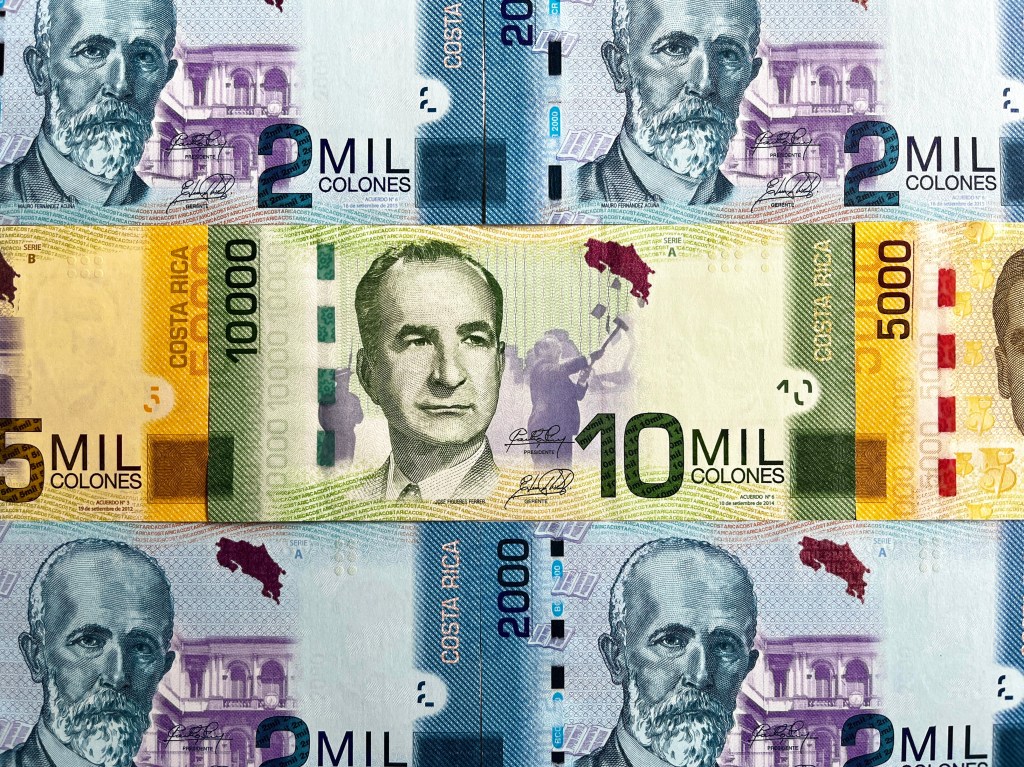
The Colón (CRC), has served as Costa Rica’s national currency since 1896 after it replaced the Peso, the previous currency more closely related to Spanish reales symbolic of the colonial era. However, the word Colón translates to Columbus (in reference to the explorer), who reached Costa Rica in 1502, therefore preserving an everlasting link to Spain and the legacy is imparted on the Central American nation.
Today the Central Bank of Costa Rica issues colónes in the following denominations: 1,000, 2,000, 5,000, 10,000, and 20,000. The 50,000 note of the 2009 series has been withdrawn and is no longer issued, however the remaining notes at large are still legal tender. The most recent series (2020/2021), features polymer notes across all denominations although the first transition to such bills began in 2010 with the 1,000. This move is consistent with the larger shift towards polymer notes across Central America as well as the Caribbean. Given the tropical climate that bestows Costa Rica, polymer notes are apt to withstand the effects of the ever-present high humidity.
The 10,000 colónes notes (as featured in this post), issued between 2009 – 2014 are comprised of cotton material, measure 146 x 67 mm, and are the third largest denomination in the series behind the 20,000 and 50,000.
Obverse
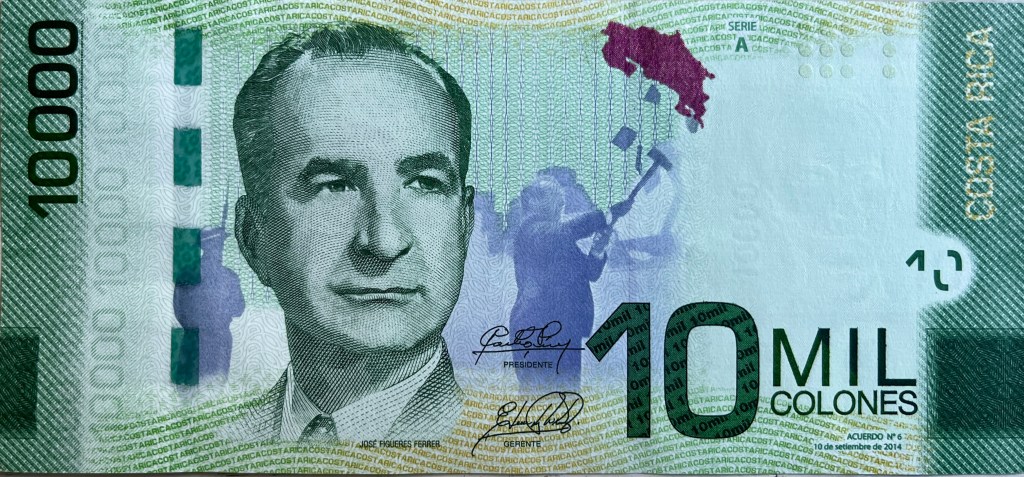
The face of the note features the portrait of José Figueres Ferrer (1906 – 1990), a former three-time president and catalyst for social and economic reform in Costa Rica. Another depiction of Ferrer is symbolic of the abolition of the nation’s armed forces. Ferrer came to power via a military junta, deposed of the incumbent and corrupt administration of Rafael Angel Calderon, and helped rewrite the nation’s constitution under the banner of democracy with the support of the United States. Among the long list of accomplishments over his multiple terms, Ferrer granted women and Afro-Costa Ricans the right to vote, nationalized the banking and insurance system, and granted Costa Rican nationality to people of African descent.
The note’s denomination appears numerically in the upper left corner and again on the bottom right, this time alpha numerically (combining 10 and “Mil Colones” or thousand colones). To the left of the president’s portrait is a soldier holding a rifle.
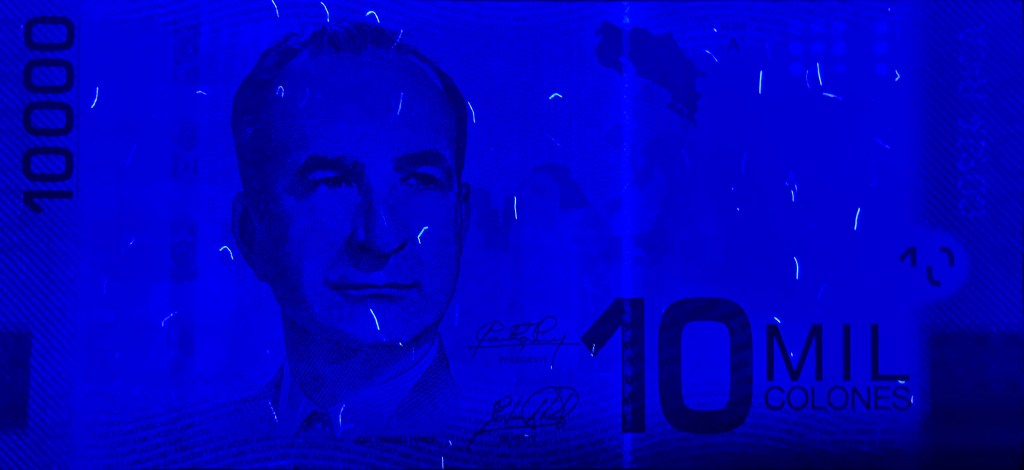
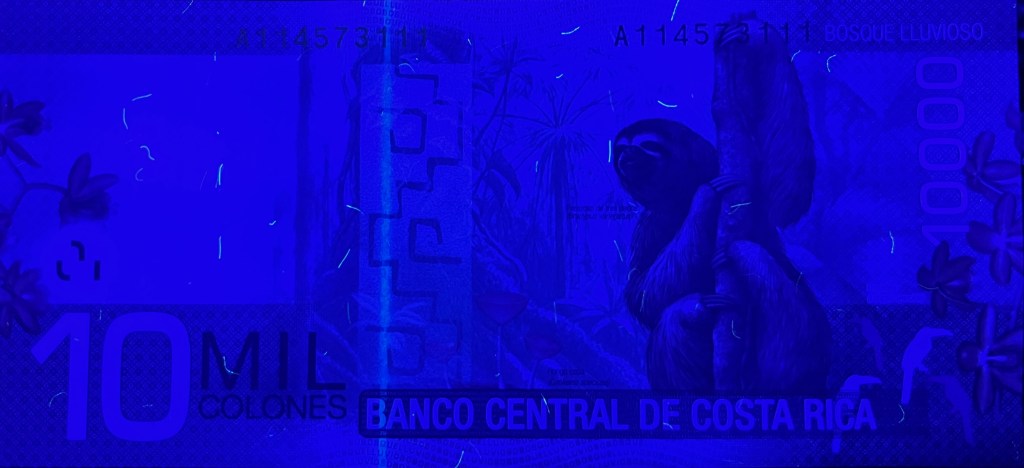
The obverse also contains several security features including a windowed security thread just to the president’s left and a watermark featuring him just right of his portrait. An image of the map of Costa Rica appears above Ferrer’s extended arms that changes colors when the note is tilted towards and away from the light. Micro printing is found on the upper and lower portions of the note in an undulating pattern. Under ultraviolet light, another security thread (a solid line), can be observed running north-south across the note’s obverse and reverse.
Reverse
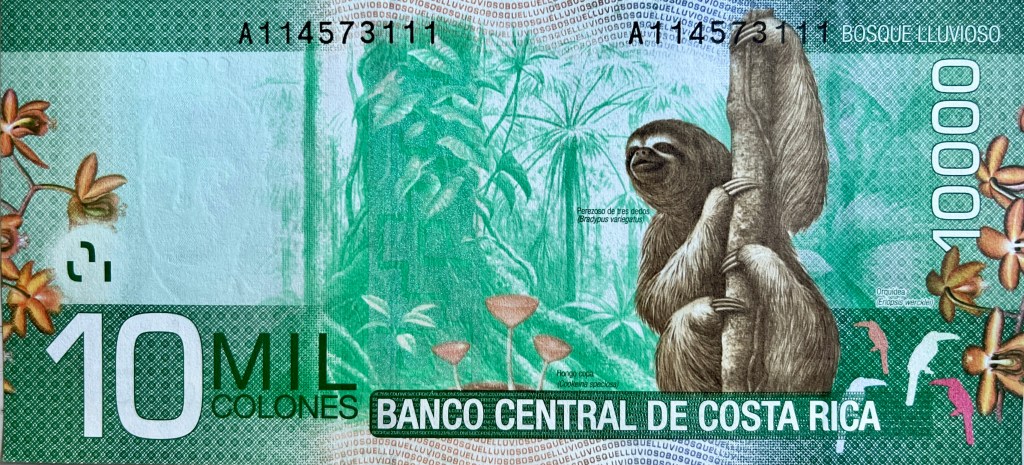
On the reverse we begin to get a glimpse of Costa Rica’s wild and rich biodiversity with a tropical rainforest vignette boasting Eriopsis orchids on the left and right margins and cup mushrooms at the bottom center. A three-toed sloth is also depicted hanging onto a tree. Costa Rica is home to two sloth species (of a total of six from around the world), with the three-toed species being more active and common than the nocturnal two-toed sloth.
The note’s denomination is listed in the same manner as on the obverse and the serial number appears twice in the upper portion. The “Banco Central de Costa Rica” (Central Bank of Costa Rica), is seen just below the sloth and the words for rainforest appear in the upper right corner (“Bosque Lluvioso”).
Micro text is observed on this side of the note along with four toucans (towards the bottom right corner), that become more prominent when the note is exposed to ultraviolet light.
Under Ultraviolet Light
My Two Cents
Costa Rica is a country that beckons to be seen, experienced and explored. It is incredibly rich in its biodiversity playing host to numerous endemic species of plants and animals, and is equally endowed with myriads of beautiful beaches that line much of its coasts. Living in the United States we are often times exposed to products derived from the Central American nation whether it be coffee, bananas or pineapples, offering us a small taste of the nation’s flavors.
On a vacation in Costa Rica in 2019, I was vastly exposed to the aptly depictive colónes showcasing the natural beauty that would conjure up much of our time there. These days, I can appreciate the moments frozen in time that the notes encapsulate and numerous diverse vignettes that fueled our adventures in 2019. Reflecting on these notes not only brings back the vivid sweet memories of our visit but also preserves that experience as part of a banknote collection, a win-win!

 The Paper Money Guy
2 responses to “Living the “Pura Vida”: Costa Rica’s 10000 Colónes Note”
Nice article Alex. When will you be able to make money through these posts!?
LikeLike
Thanks, James! This is a labor of love, the only money here is in the fabric of the content.
LikeLike