There are many cool themes, icons and depictions on banknotes that can grab a collector’s attention. Some of these subjects feature various persons, such as presidents or heads of state. Subjects also include flora and fauna, geographic locations, landscapes, and many others. Among the more prominent categories are flora and fauna, particularly in countries where endemic species thrive and contribute to their respective national identities. More specifically, one of those subjects are animals. They can vary from sharks to spiders, eagles, and orangutans. They bring to life the personality of notes with a touch of local flare.
For this particular post, the animal in focus is the lion. Its essence has adorned the front and back of various notes from all around the world for decades. Whether pictured in their natural habitat or symbolically as statues or icons, banknotes of several countries portray lions as part of their compositions.
The most prevalent appearances of lions are attributed to several Sub-Saharan African nations where the large cats are native and make up the largest population of wild lions around the world. Aside African lions, there is also an Asiatic lion, primarily found in a particular region of India. Interesting fact: India’s state emblem is a depiction of four Asiatic lions which represent power, courage, confidence and faith.
Lions on African Banknotes
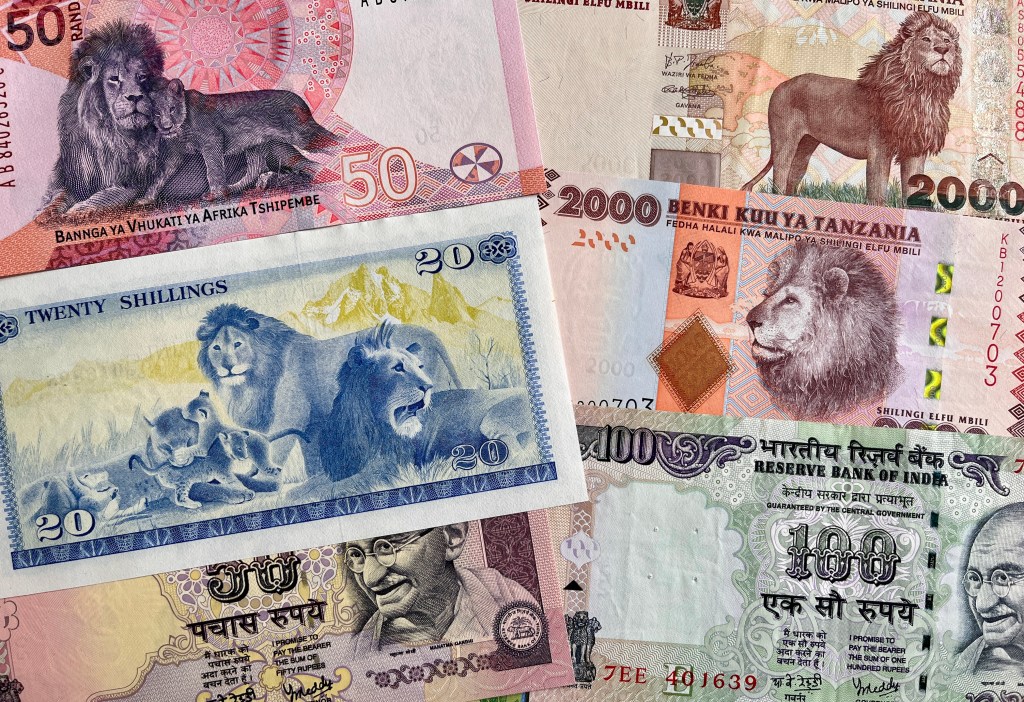
The African lion is the subject of several countries, among them, Tanzania, South Africa and Kenya (which are depicted below).
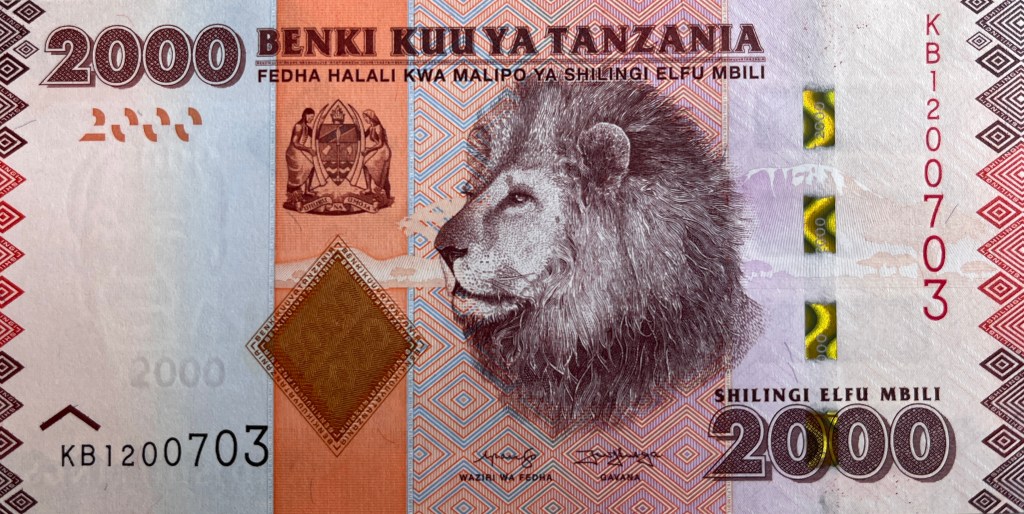
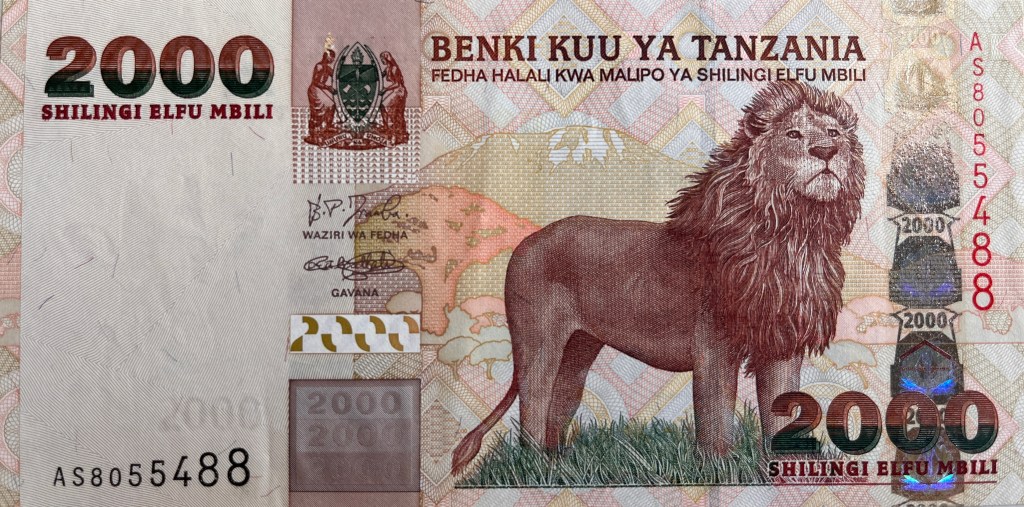
Tanzania 2000 Shilling Note (2003 and 2010)
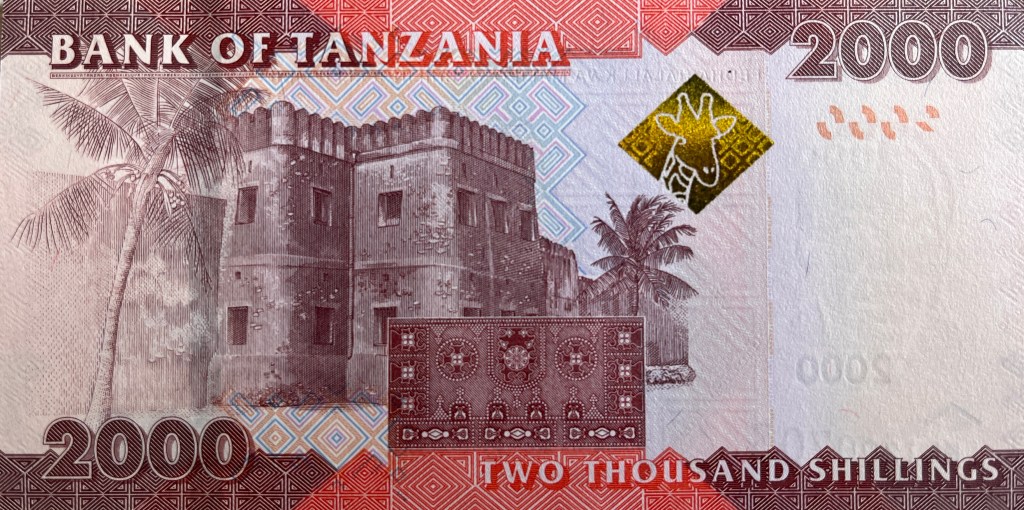
The 2010 and 2003 Tanzania 2000 Shillings feature a lion on their obverse in two different ways. The 2010 note depicts a maned lion’s head as the central figure while the 2003 note features the full body of a male lion. Tanzania is home to the largest number of wild lions living in Africa (or 40% of the continent’s total lion count), with the Serengeti National Park playing host to 3,000.

South Africa 50 Rand (2023 Series)
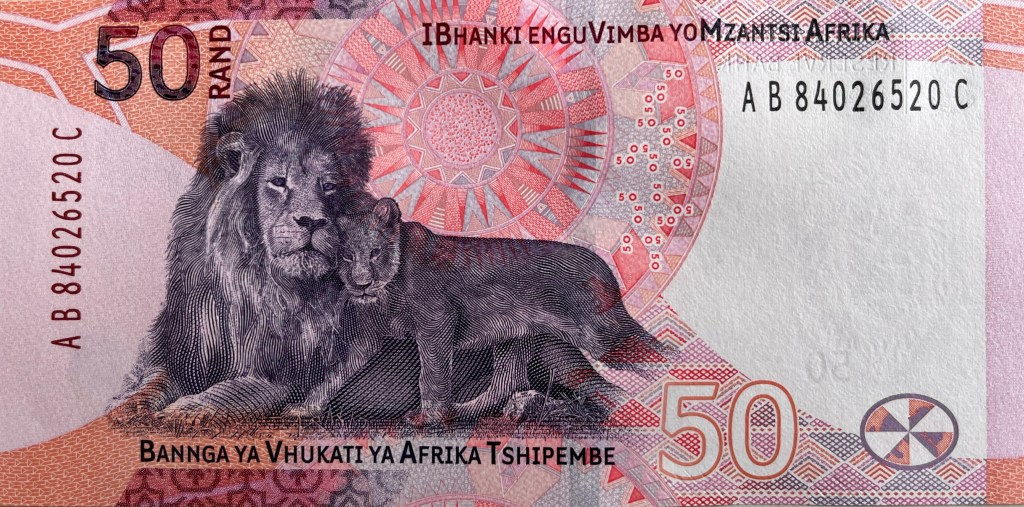
Next is South Africa’s 50 Rand note donned by former president Nelson Mandela on its obverse and a male lion next to what appears to be a juvenile lion, on the reverse. The note’s sides bring vibrancy to its motifs with prominent purple and pink hues. The 50 Rand is the third denomination within the 2023 series consisting of five denominations (10, 20, 50, 100, 200). Mandela is uniformly featured on the obverse of the entire series while South Africa’s “Big 5” animals adorn the reverse (the lion being one of them). South Africa is home to the second largest population of lions in Africa (estimated at over 3,000), after Tanzania.

Kenya 20 Shillings (1978)
Kenya’s 1978 Series 20 Shillings note features former President Jomo Kenyatta on the face and captures a lion family on the reverse. Kenya’s lion population ranks within top five among African nations at around 2,500. Unlike other regions where lion populations have been in decline, Kenya defied this trend and grew its population by 25% between 2000 – 2010.


Lions on Asian Banknotes
In contrast to the depictions of lions in the wild or in animal form, the depictions of lions on some Asian banknotes have a more symbolic presence. They appear as statues or represent signs of power.
India 50 and 100 Rupees (2005 and 2006)
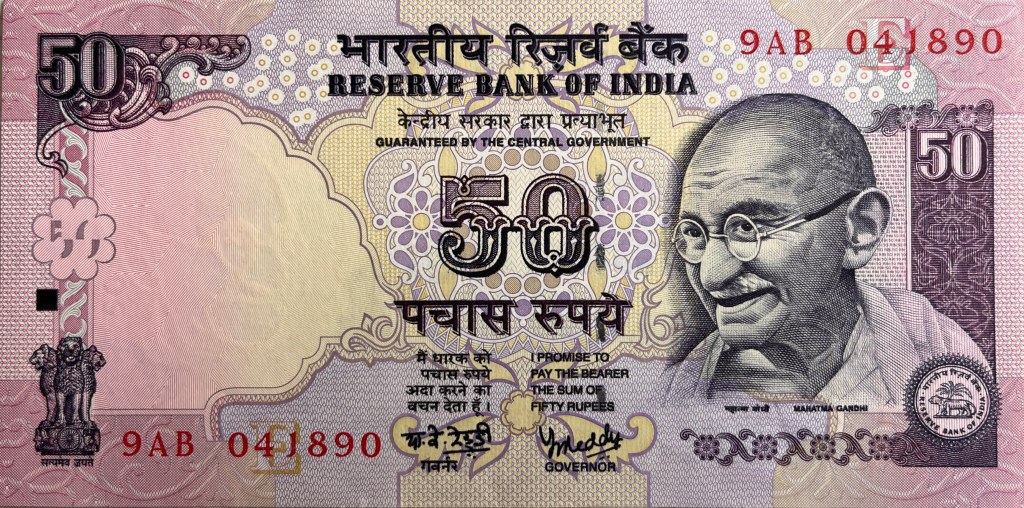
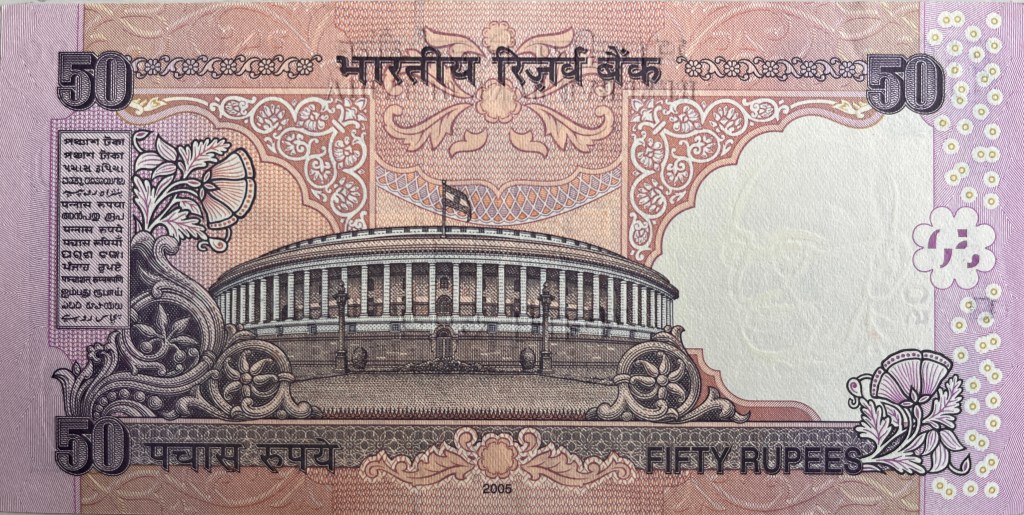
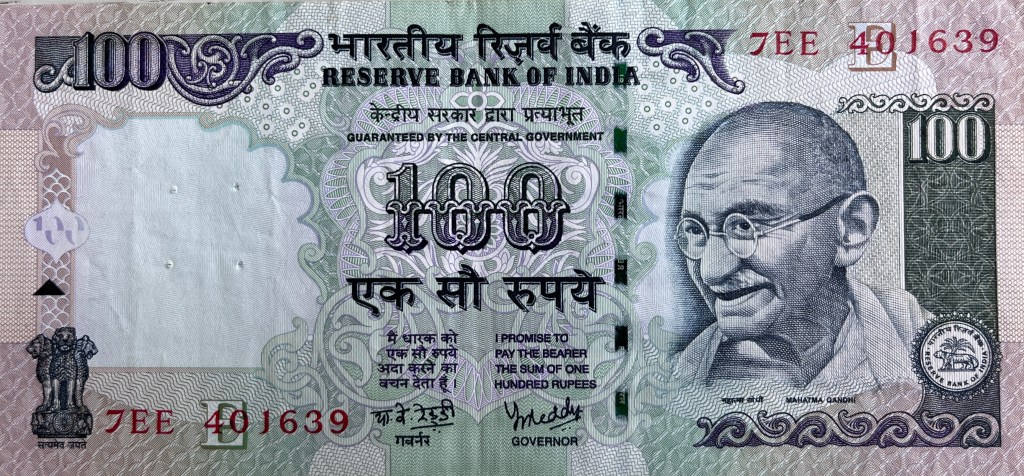
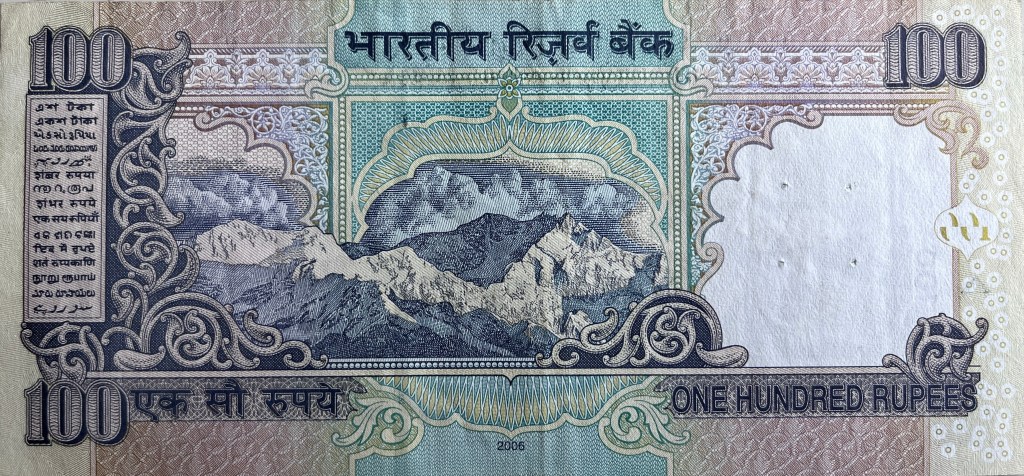
India’s 2005 and 2006 Series 50 and 100 Rupees notes are adorned with the Lion Capital of Ashoka. This is the head of a column commissioned by an ancient emperor around 250 BCE. It consists of four Asiatic lions with their backs against one another. They can be observed within the bottom left corners of the notes. Alongside the symbolic lion quartet is the portrait of Mahatma Gandhi, politician and activist who fought for India’s independence from British rule. The lion population of India today is believed to be around 600, and is located in the Gir Forest in Western India.
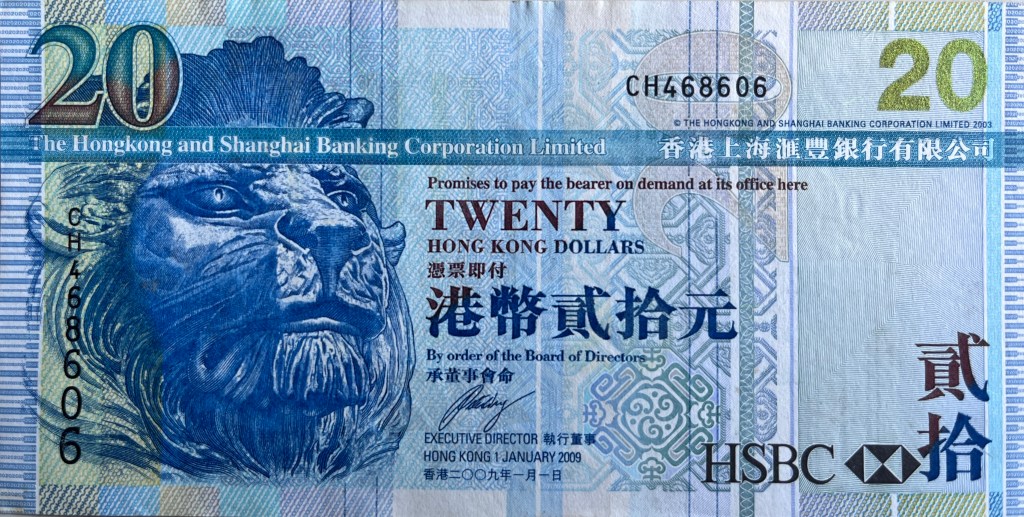
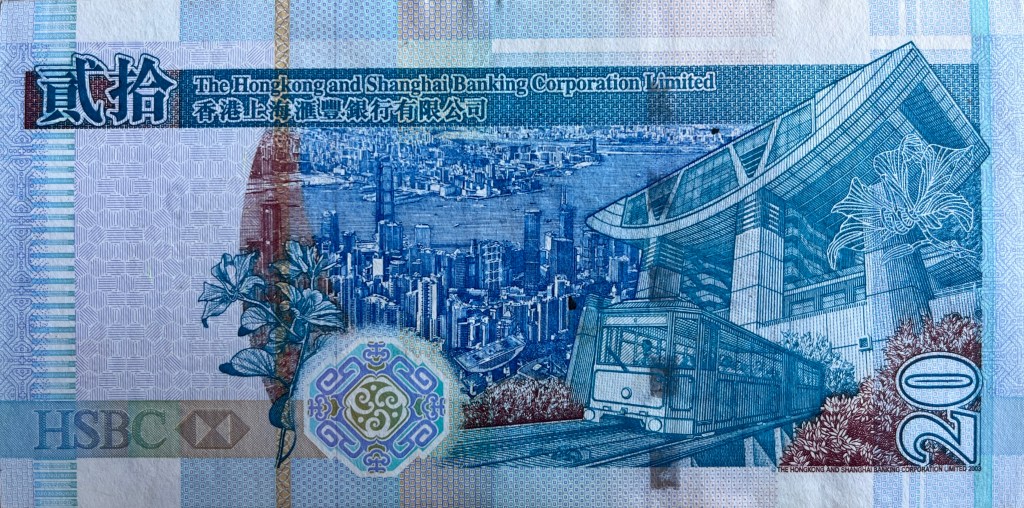
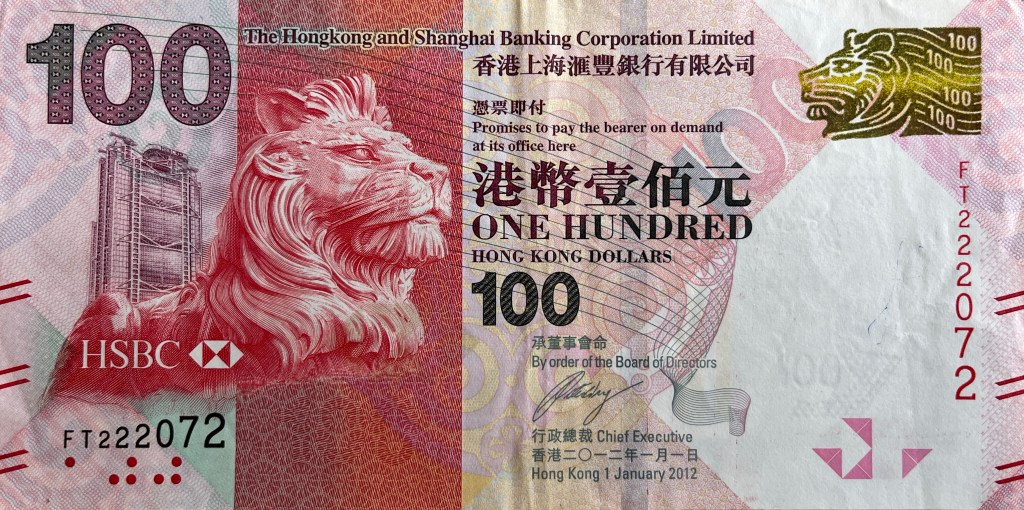
Hong Kong 20, 50 and 100 Dollars (2006, 2009 and 2012)
Hong Kong’s dollars are arguably some of the most powerful in triggering one’s memory of their appearance as many notes bear a lion on their obverse. The lion became the symbol of HSBC (The Hongkong and Shanghai Banking Corporation Limited) in 1923. HSBC is one of three currency issuing authorities of Hong Kong dollars. Lion sculptures have stood by the bank’s main entrance for over 100 years. These sculptures have influenced people to refer to HSBC as the “Lion Bank”.


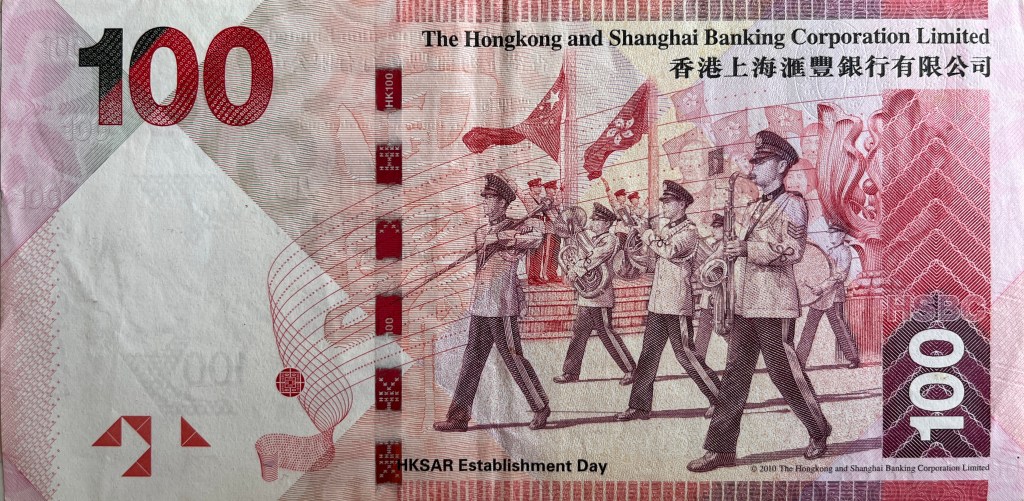
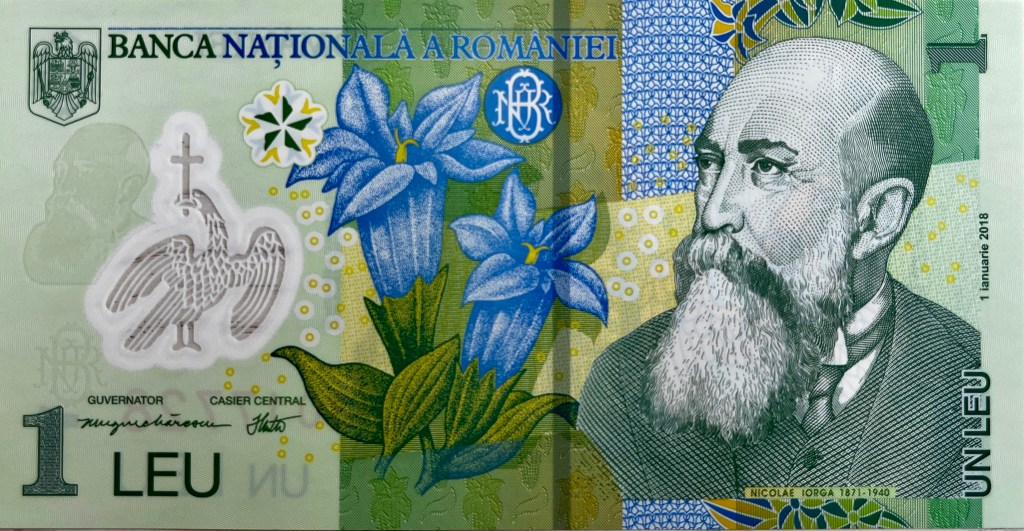
Lions are a fun subject to inspire a banknote collection. Whether depicted in the wild or as icons symbolizing strength and guardianship, there is plenty to choose from in pursuit of such notes. Aside from depictions of the king of the jungle on currency, some countries’ currencies themselves are named “lions”. One of those countries is Romania where the banknotes are known as leu/lei or lion/lions.
Like to see more animals depictions on banknotes? If so, which ones!

 The Paper Money Guy
3 responses to “The Pride of Banknotes: Lions Featured on Money”
Alex, you continue to amaze me. Either you have a lot of time to kill or you are particularly gifted on assembling these highly detailed notes! (The note on Romania was interestingly inserted was unexpected!). One day you may turn this into your day job… James
LikeLiked by 1 person
Thanks, James. When there’s time to be found, I try to find it. Glad you enjoyed the post and unexpected twist! Appreciate the note, as always.
LikeLike
Money it’s a gas,
grab that cash with both hands and make a stash!
LikeLiked by 1 person