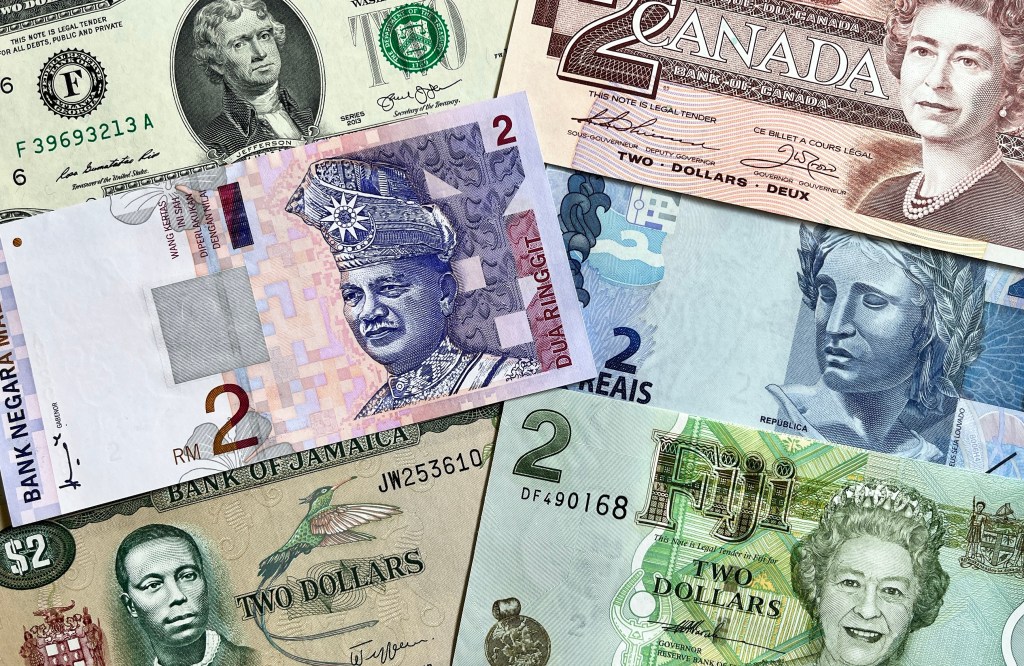
After a short hiatus and a busy summer, I’m excited to be back as The Paper Money Guy turns 2. Keeping with this theme, I decided to profile some of my favorite two denomination notes from around the world. Some of these have been demonetized and are no longer legal tender. In some cases, the denomination still exists however now as a coin. As a collector, it’s fun to revisit the past and dig into the glory days of some of these notes.
Only about ten countries have a current banknote series that includes the 2 denomination as legal tender. The most recognizable is arguably the US’s $2, a note that draws attention not only from collectors but also the public at large. The US is one of six nations in the Western Hemisphere that still circulates a $2 bill. The others are Barbados, Belize, Bermuda, Brazil, and Honduras. In the Eastern Hemisphere, Ghana, Papua New Guinea, Singapore, and Tonga round out the list.
First up is one of my favorite bills from the Caribbean nation of Jamaica, followed by a few others from around the world.
Jamaica $2 (1989 Series)
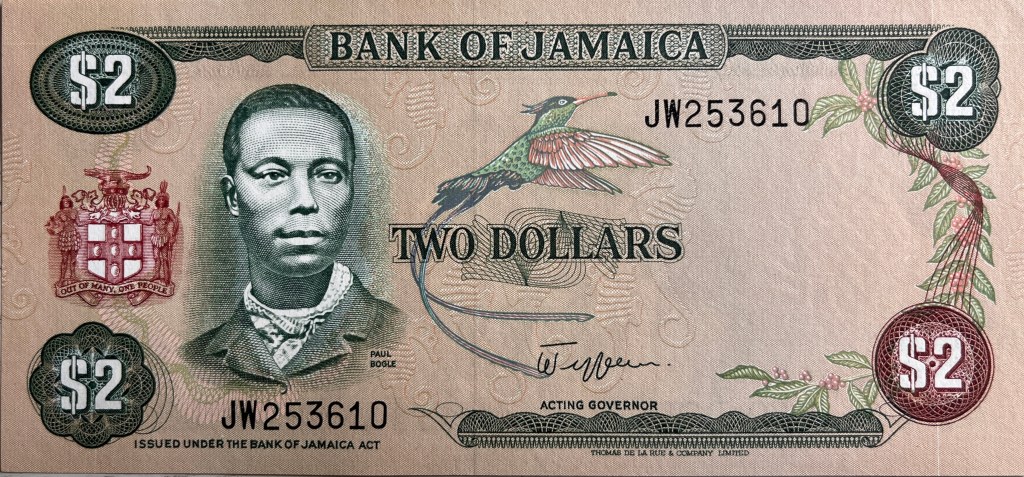
The beige-green paper material note was issued by the Bank of Jamaica. It circulated from 1969 – 1994 and was eventually replaced by a coin. The obverse features Paul Bogle, a deacon and activist who fought for equal treatment of all citizens of Jamaica. Next to him is a Red-Billed Streamertail or “Doctor Bird” and a Jamaican Cherry Tree. There is also a watermark of a pineapple that becomes apparent when the note is held up to the light.
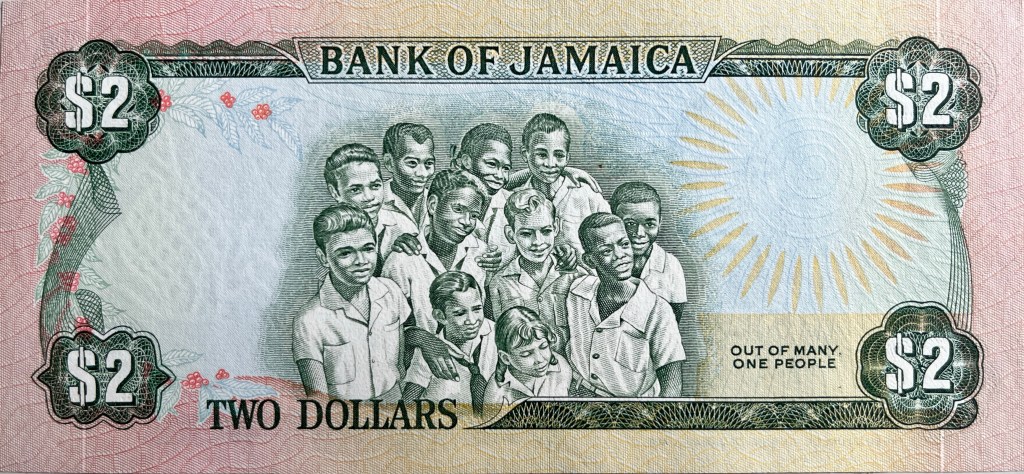
On the back of the note, a group of school children is depicted. They are accompanied by the inscription “OUT OF MANY ONE PEOPLE”, the national motto of Jamaica. The cherry tree is seen on this side as well along with the Sun. The same image of the children is being used on Jamaica’s current $2,000 bill.
Note: Paul Bogle is considered a national hero. He fought for justice and human rights. Unfortunately, he paid for this with his life. He was hanged for leading a rebellion against Jamaica’s colonial power at that time, Britain.
Canada 2 Dollars (1986 Series)
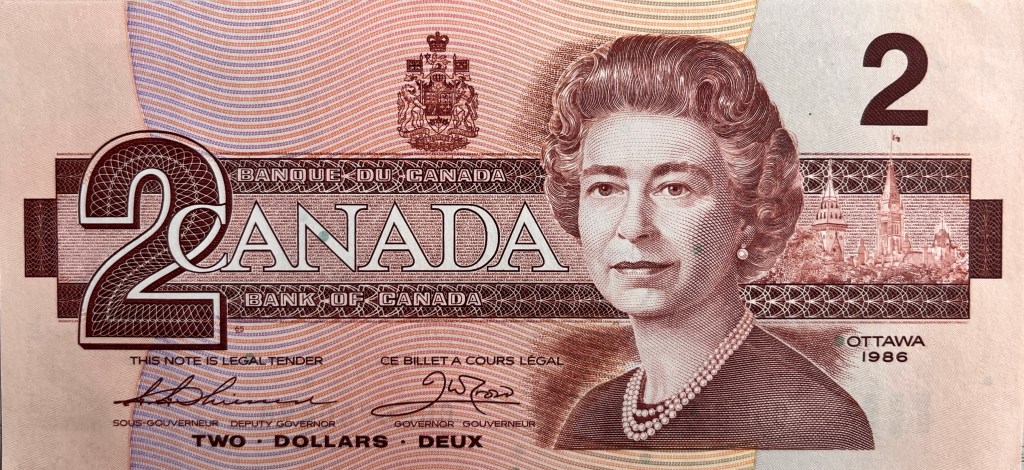
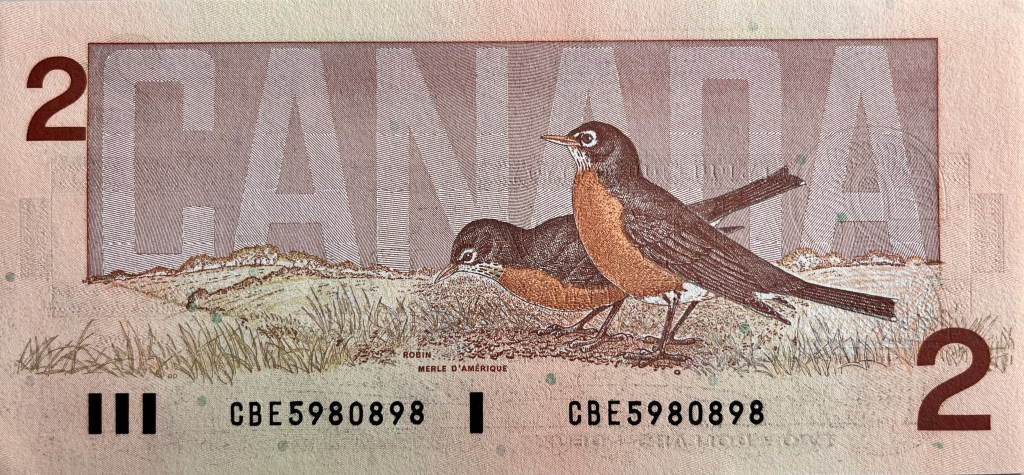
Issued by the Bank of Canada, the 1986 paper 2 dollar note was part of the Birds of Canada Series. All denominations featured native birds. The series marked the last time a 2 dollar note existed before it was converted to a coin in 1996. In 2021, its legal tender status was terminated along with several other notes (1, 25, 500 and 1,000).
The bill’s face depicts former British monarch Queen Elizabeth II. It also shows the Canadian Coat of Arms and an image of the Parliament buildings in Ottawa. Both of Canada’s official languages (English & French), are featured on the note.
The reverse brings to life the note’s terracotta hues and captures a pair of robins in a field. With the Bird Series, the advent of new anti-counterfeiting qualities were introduced. These included fine line engraving and micro printing. It also included raised ink detected on the Queen’s portrait and across “BANK OF CANADA” and “BANQUE DU CANADA”. A three line vertical barcode was implemented on the reverse, for the visually impaired to distinguish the note’s value.
United States $2 (2013 Series)
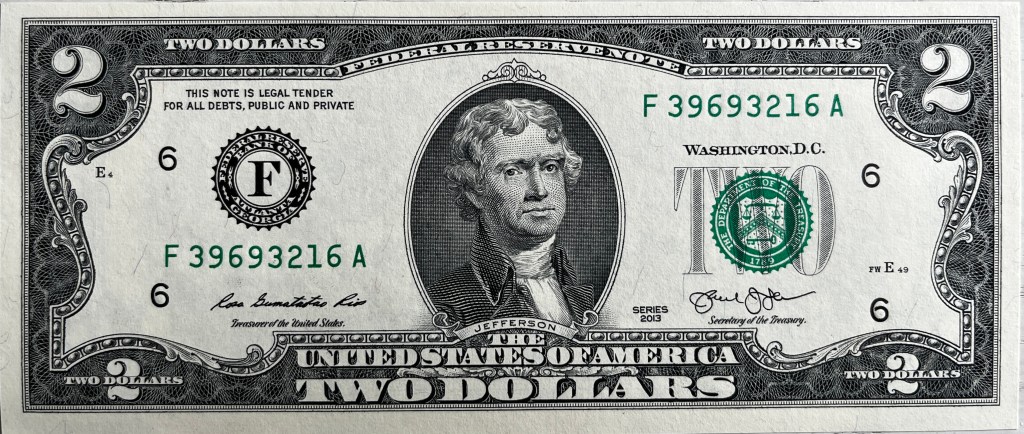
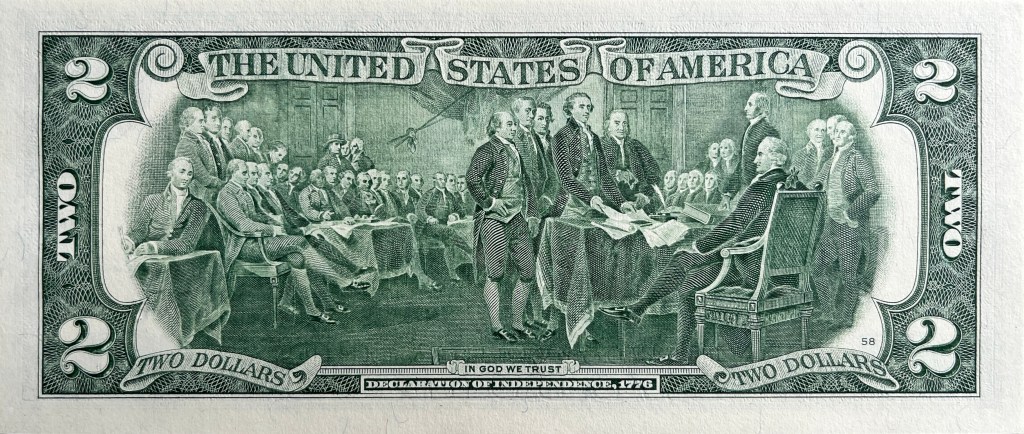
The United States Federal Reserve issues the $2 note which features Thomas Jefferson, founding father and 3rd president. There are two seals on the note’s face. The Federal Reserve Bank Seal is on the left and the US Treasury Seal is to the right of Jefferson. The back captures John Trumbull’s depiction of the signing of the Declaration of Independence. This motif was first introduced with the 1976 Series notes and has since stayed the course.
The note’s security features are modest. They include raised printing across some of the characters around Jefferson’s portrait. Red and blue fibers woven into the note provide additional authentication. The note is made from a combination of cotton and linen.
The $2 and $1 notes are the only non-redesigned US notes in circulation. No plans are on the horizon to change either one.
Fiji 2 Dollars (2007 Series)
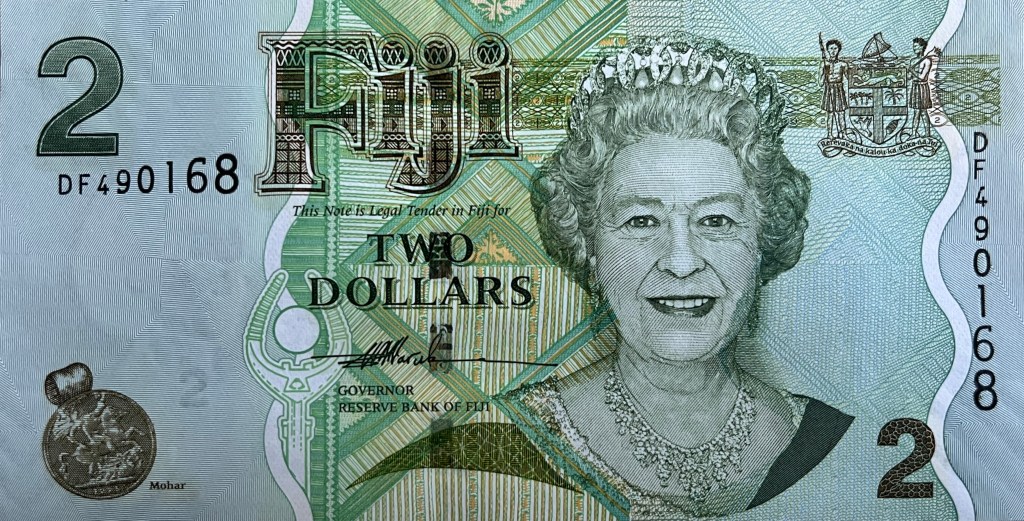
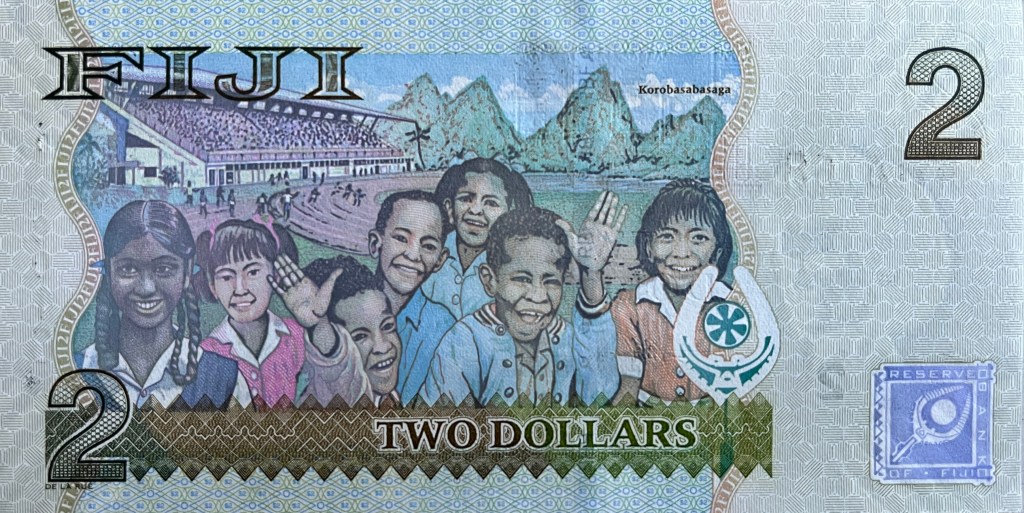
This 2 dollar paper note was issued by the Reserve Bank of Fiji and circulated between 2007 – 2011. It was part of series that emphasized the country’s cultural, social and traditional makeup. The green backdrop ushers in traditional Fijian design punctuated by Queen Elizabeth II’s bust, the Coat of Arms and a canoe masthead. A Mohar, a sovereign locket, is also observed on the bottom left.
The back of the note features a colorful vignette. It shows jovial school children, Fiji’s ANZ National Stadium, and the Koroba Mountains in the background.
A roundup of security features include a watermark, a vertical security thread, and a traditional canoe masthead (domodomo). Under UV light, presence of a “2” on the obverse and the domodomo on the reverse become apparent.
The note was demonetized in 2013 and replaced by a 2 dollar coin.
Malaysia 2 Ringgit (1996 Series)
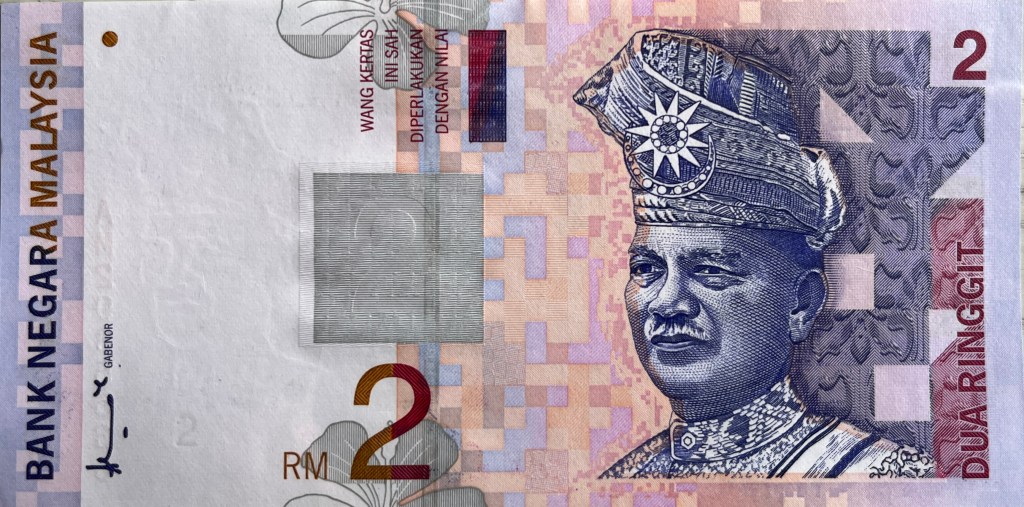
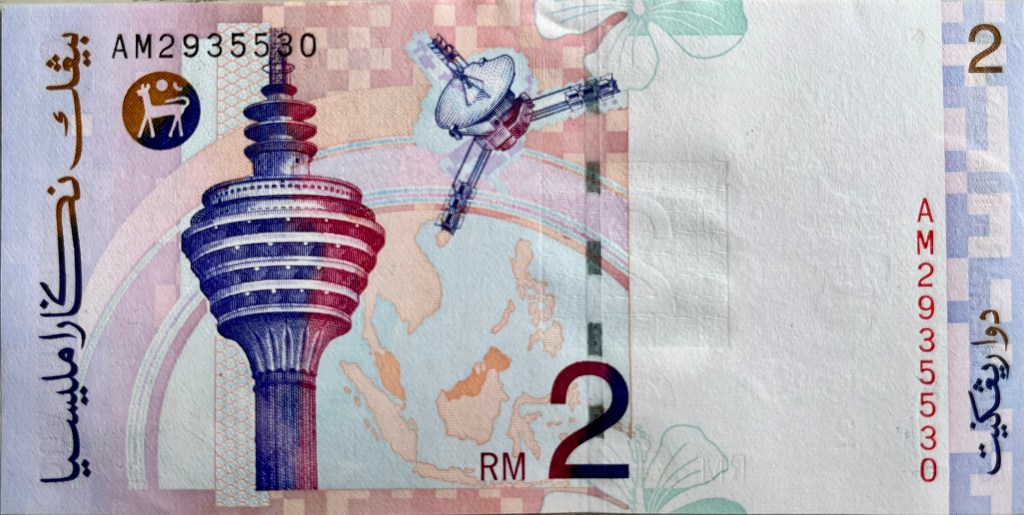
Introduced in 1996 by Bank Negara Malaysia, the 2 Ringgit marked the first introduction of the denomination as a bill. The paper note was part of the Third Series issued by the bank. This series aimed to showcase Malaysia’s industrial and economic development. This was part of a national effort known as Wawasan 2020 or Vision 2020. The 2 Ringgit was not included in the subsequent series (4th), however it is still considered legal tender today.
The face of the note depicts Tuanku Abdul Rahman, Malaysia’s first King. He was the head of state after the nation gained its independence in 1957. He is portrayed in traditional royal garb. The back of the note captures a scene of modern technological advancement symbolic of the Vision 2020 project. It features the Kuala Lumpur Tower and a Malaysia East Asia Satellite. The central bank’s official logo, a deer, is visible next to the tower. The backdrop portrays a map of South East Asia.
There note’s security features include a watermark of the monarch, a vertical strip, micro and raised printing. UV light icons are also embedded into the note.
Note: Malaysia fell short of achieving the exact goals of Wawasan 2020. However, its efforts contributed to increased prosperity and development overall.
Brazil 2 Reais (2010 Series)
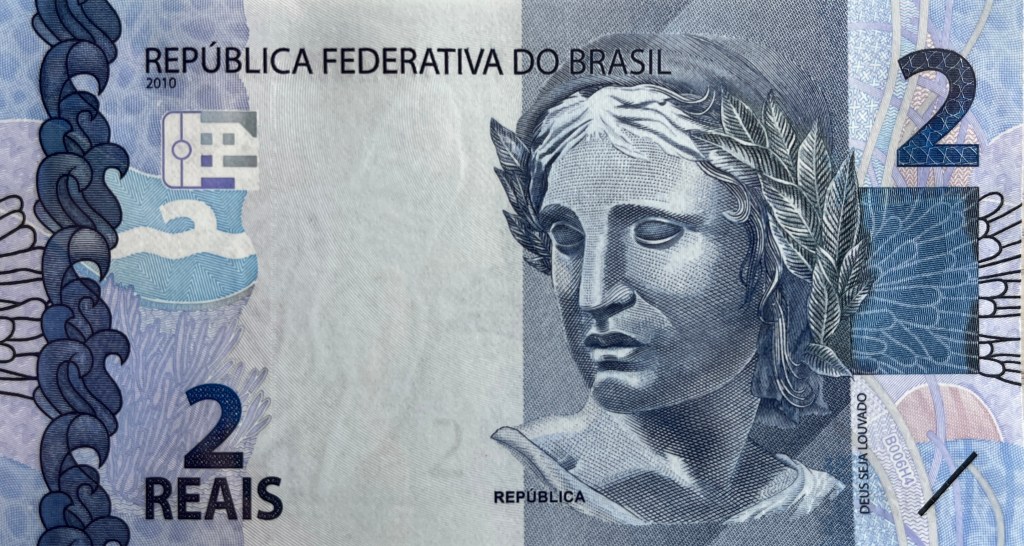

The 2 Reais paper note was introduced by the Banco Central do Brasil in 2001 as part of the First Real Series. The note featured here is a Second Series note, introduced in 2010. Unlike the first series, the second series notes increase in size as the denominations ascend in value. This feature was implemented to help the visually impaired distinguish the notes.
The 2 Reais is overtaken by shades of blue and a consistent maritime theme. On the obverse we see the Effigy of the Republic, a statue that represents Brazil. This exact depiction also appears on all other denominations. Hints of a wave and coral are also present alongside the Effigy bust. The note’s reverse further indulges the ocean setting portraying a Hawksbill turtle, a sea star, coral and two baby turtles.
The note’s security features include a watermark of a turtle, an electrotype mark of a “2”, and raised printing. These measures were primarily implemented to combat counterfeiting.
My Two Cents
The number 2 has various meanings, it projects duality, cooperation and is also symbolic of opposite phenomena, light and dark, life and death, for example.
In our case, I can’t help but ponder whether the two note represents an endangered species or a true survivor? There seem to be many forces working against the existence of the two denomination note worldwide. They range from economic to cultural, digital and simply being unpopular, which combine to stack the deck against the “2”. Whichever forces may ultimately succeed to render the two obsolete, time will only tell.
Over the past few decades, many more countries have demonetized their 2 unit notes than have instituted it. One reason for it to be introduced is a reset of a country’s currency, typically following a period of hyperinflation. One recent example was that of Zimbabwe in the early 2000s. Its central bank issued a new series of dollars in 2019 that included a 2 dollar note. However that episode was short lived, lasting only 5 years. In April of 2024, the Reserve Bank of Zimbabwe introduced a new currency, the ZiG. Interestingly, this new currency is backed by precious metals, primarily gold. Will other Zimbabwe like episodes emerge any time soon? Will other countries have to reset their currencies and launch a 2 note? Time will only tell.
Either way, I hope the current roster of countries that still circulate a “2” will hold their ground, without compromise.

 The Paper Money Guy
7 responses to “Growing Up: The Paper Money Guy Turns 2!”
Welcome back, PMG! Awesome entry…
The Jamaica entry w the school kids, brought the HBO series, Get Millie Black to mind…. good watch!
Keep em coming PMG. World of knowlege!
Big Thanks!
LikeLiked by 1 person
Oh cool! Just checked out the trailer, looks pretty badass. Great to see you here and thank you for the kind note!
LikeLike
He’s back!
LikeLiked by 1 person
hi Alex, I always enjoy reading your posts, keep it going and Happy Anniversary!!!
Sylvie
LikeLiked by 1 person
Thank you for being here and keeping up with them! 😍
LikeLike
I thought the only interesting thing about money was spending it — you changed my mind. Reading about currency is not boring! At least when The Paper Money Guy writes about it. Well done Alex
LikeLiked by 1 person
Honored to be a mind changer! Thanks for keeping up with the posts, hope you’re enjoying the tales behind each note. : )
LikeLike